Posts

Showing posts with the label Tudors

Lady Jane Rochford, Viscount of Rochford

Image
She notoriously accused both her husband- George Boleyn, and his sister- Anne Boleyn of incest and treason which sent them both to the executioner's block. She later testified against Anne of Cleves , which could (but didn't) have resulted in the latter's death and then against Catherine Howard , which sent both Lady Rochford and Catherine Howard to their death. This woman is rarely spoken about but she was lady-in-waiting to five of Henry VIII's wives. Lady Jane Rochford was born in Norfolk in circa 1505. Her father was Henry Parker, 10th Baron Morley, a court translator and peer; he was knighted at the coronation of Anne Boleyn. Her mother was Alice St. John and her father was a 1st cousin to Henry VII. Jane had two siblings, the first was Margaret Parker, who married Sir John Shelton and the second was Henry Parker, a politician for Hertfordshire. Probably educated at home, Jane went to court to be a lady-in-waiting to Henry VIII's first wife- Catherine of Ar...
The Murder of Edward VI's Dog...

Image
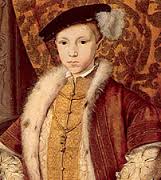
In 1547, Henry VIII died and his nine year old son became King Edward VI of England. As he was not yet an adult, Edward's uncle Edward Seymour, 1st Duke of Somerset (brother of the king's dead mother-  Jane Seymour ) became Lord Protector, ruling the country on behalf of Edward VI. He was Lord Protector between 1547 and 1549. Thomas Seymour (young Edward's 'favourite' uncle) had been promoted to Lord High Admiral, this gave him the power to control the royal navy. Seymour took advantage of this power and tried to lead a rebellion on the throne. Now, the officials had there eye on the scheming uncle... Jealous of his brother's high position in the country, Thomas Seymour  snuck into the palace one night in an attempt to kidnap his nephew. Whilst breaking into the palace, one of Edward's favourite pets, a spaniel began barking. Afraid that the dog would alert the guards, Seymour shot it. On 28th March 1549, Thomas Seymour was beheaded for high treason. ...

12 History Facts You Probably Did't Know

1) In Tudor England if you were found guilty of "vagrancy" (being a tramp) twice, there would be a hole burned through your ear - a third time and you would be executed! 2) In 1764 Mozart composed his first symphony at the age of eightIn  3) In 931 a farmer killed King Theinhko of Burma for eating his cucumbers without asking. The farmer then had himself crowend King Nyanng-u Sawrahan and became known as the "Cucumber King"  4) On 28th April, 1978 the president of Afghanistan Mohammed Daoud Khan was shot dead in a coup. The new government said he had resigned for health reasons. 5) The  Anglo-Zanzibar War was the shortest war in recorded history lasting for 45 minutes on 27th August 1896. 6) On the other hand, the longest war in history was the Dutch-Scilly War, lasting from 1651-1986; 335 years.      7) Queen Elizabeth I, owned a total of 3000 dresses! 8) Most Roman gladiators ate a vegetarian diet consisting of grains, beans, dried frui...

Katherine Parr

Image
Katherine Parr By the time Henry VIII married his sixth and final wife- Katherine Parr, he had been previously married five times and she had been married two previous times. When the king married Katherine, he didn't really need a wife. The majority of his court, they knew that he was nearing the end of his life, but to say it publicly, was treason and you could even die for suggesting the death of a monarch! To be absolutely honest, he needed a nurse. However the royal couple did grow to love each other, and Katherine was a wonderful stepmother to Henry's three children: Mary, Elizabeth and Edward.  Katherine was the daughter of the Tudor knight Sir Thomas Parr and his wife Maud Green . She was the eldest surviving child of Thomas and Maud and she was born in the year of 1512, probably in August. Katherine had two little siblings- William and Anne. In 1517, her father died, more than likely due to the sweating sickness. With their mother in charge of the royal ed...

4 ways to remember Henry VIII's six wives

Image
Henry VIII is probably most famous for marrying six wives:  Catherine of Aragon , Anne Boleyn , Jane Seymour , Anne of Cleves ,  Catherine Howard and Catherine Parr .  But not everyone can remember them just like that, so here's a few ways to remember it. 1. The rhyme This doesn't tell you the names of the wives however it dose tell you what happend to them. Divorced,  Beheaded,  Died,  Divorced,  Beheaded,  Survived. 2. A song  I heard this song and loved it! It is really fun and it helps you to remember the basic information about Henry VII's six wives! 3. Get to know the six wives If you want to know a little more detail about King Henry VIII's six wives, then you can take a look at this blog series by us! 1.  Catherine of Aragon 2.  Anne Boleyn 3.  Jane Seymour 4.  Anne of Cleves 5.  Catherine Howard 6.  Katherine Parr 4. A...

What did Richard III Actually Look Like?

Image
Throughout history both writers and actors have been highly influenced various Tudor propagandists and playwrights, such as William Shakespeare, to portray the final Plantagenet king- Richard III as an evil villain and cruel and uncaring uncle. As a result the generations after Richard's defeat, at the Battle of Bosworth, have grown up with the belief that Richard was a nasty, manipulative man who wrangled his way to the throne of England. But was he really as bad as he is describe?  To start off with, Tudor playwright William Shakespeare (1564- 1616) and Medieval historian John Rous (1411- 1491) both describe Richard as an ugly being. Here is some of what they have to say about the Medieval monarch: William Shakespeare: "A poisonous bunch- backed toad, a limping hunch- back with a withered arm." John Rous: "Richard was retained within his mother's womb for two years and emerging with teeth and hair to his shoulders. He was of small stature, with a sho...

Common Tudor Diseases

Image
Dysentery: Still active today, dysentery is a vile disease that causes a fever, stomach cramps, dehydration and diarrhoea. This is the disease that may have caused the death of Henry VIII's  hated advisor, Cardinal Thomas Worsley whilst he was imprisoned. The infection is a virus which spreads through dirty water. In the Tudor era, water was usually contaminated by human and animal waste so society would avoid drinking water by drinking ale and wine for the rich.     Smallpox: Smallpox is like a very extreme version of chicken pox. If you caught the disease, it would probably be fatal. In the autumn of 1562, Elizabeth I came done with the deadly disease, thankfully she survived but was physically scarred on her face for the rest of her life. As a result she wore heavy white makeup. Symptoms were fever, chills, headaches, back ache and sometimes rashes of pus filled blisters! In sever cases it could damage your insides. A small pox vaccination was developed by Dr. ...

Henry VIII: Childhood

Image
Six years after winning the Battle of Bosworth Field, Henry VII and his wife Elizabeth of York- daughter of Elizabeth Woodville and Edward IV- had their third child and second son: Prince Henry. Prince Henry was born on 28th June 1491 in the Palace of Placentia in Greenwich, London. No one expected the royal baby to ever become king because he had an older brother- Prince Arthur, prince of Wales. But Prince Arthur passed away in 1502 from suspected sweating sickness but it may also have been typhoid. Henry grew up as the 'spare' child. Nevertheless he was spoilt rotten by his grandmother- Margaret Beaufort, who managed his education- and his mother. At the time of his birth, Henry already had two siblings- Prince Arthur and Princess Margaret (later queen of Scotland and grandmother to Mary, Queen of Scots). He also had five other siblings: Elizabeth (died aged two), Mary (lived to adulthood and married Charles Brandon after the king of France), Edmund (died aged one year ol...

Analysed image of Elizabeth I

Image
In this image of Queen Elizabeth I of England, painted in celebration of English victory against the Spanish Armada, her hand is elegantly resting on a globe. This could be translated that she is the most powerful monarch in the world at that time. There is also a crown which is probably ensuring that anyone looking at this portrait, that they know that this woman rules England. The images of a fleet of ships being destroyed is probably there to show that this is celebrating Elizabeth's victory. Her dress is embellished with small flowers. These could be Tudor roses reminding people of her powerful heritage. She wears her hair up to tell people that she may not be a man but she is as good as any man could be on the throne of England! The vast amount of pearls represents her chastity and early portraits show here with a necklace with an 'A' on it. Historians believe that it could have belonged to her doomed mother. Sir Francis Bacon did make a rather rude and unkind rem...

Greensleeves

Greensleeves Alas, my love, you do me wrong, To cast me off discourteously. For I have loved you well and long, Delighting in your company. Chorus: Greensleeves was all my joy Greensleeves was my delight, Greensleeves was my heart of gold, And who but my lady greensleeves. Your vows you’ve broken, like my heart, Oh, why did you so enrapture me? Now I remain in a world apart But my heart remains in captivity. Chorus I have been ready at your hand, To grant whatever you would crave, I have both wagered life and land, Your love and good-will for to have. Chorus If you intend thus to disdain, It does the more enrapture me, And even so, I still remain A lover in captivity. Chorus My men were clothed all in green, And they did ever wait on thee; All this was gallant to be seen, And yet thou wouldst not love me. Chorus Thou couldst desire no earthly thing, but still thou hadst it readily. Thy music still to play and sing; ...

Elizabethan Makeup

Image
Makeup was a sign of status for wealthy women during the Tudor period. It was also used to cover up scars from diseases such as small pox.  The ideal Elizabethan look was pale creamy skin, bright eyes, red lips and rosy cheeks. The Tudor queens- Mary I and Elizabeth I made ginger hair popular and women would go as far as dying their hair with urine to make it blonde! Rich people hated the idea of being tanned because that inferred that you had to work in fields, therefore they avoided contact with the sun.  During her later life, Queen Elizabeth I wore heavy white makeup to cover up her greying and wrinkling skin. This makeup was wildly used by many rich ladies. It was made up of vinegar and toxic lead... Another way was to 'bleed' the woman. This could be done by applying leeches to the arm or by slicing the wrists to drain the blood; neither of which are very healthy . Women would also add an expensive red rouge/ blusher to their cheeks and stain the lips with coc...

Tudor Executions

Throughout history, an execution has been seen as an excellent day out for all the family! Now the death penalty has been abolished but if it hadn't and you took your family to see a murderer being hung or beheaded then society would be slightly concerned... This post will tell you exactly what happened at executions and how you could be executed if you committed a serious crime. Please remember that these are mainly the common and most well known methods. Beheading When people think of the Tudors, they usually think of beheadings. Beheading was considered the best way to be executed because it was the quickest way to die if you had a decent executioner. This way of execution meant that you were decapitated. It was usually reserved for the upper classes who have been found guilty usually of treason. and several queens have been executed this way- Anne Boleyn, Catherine Howard, Lady Jane Grey and Mary Queen of Scots.   Hanging Hanging was the common way to die. A rope...

Marriage in Tudor England

Image
Marriage of Henry VIII to Anne Boleyn The common belief about marriage in Tudor England is that people married at extremely young ages and had no choice. Surprisingly, this was not typically the case. Studies show that in Elizabethan times, the average age for women to marry was 26 years old and for men- between the ages of 27 and 29 years old. This was because the average family had to save up money for the newly wedded couple to rent a house and for basic necessities. However 1 in 6 people were not married in their forties and it is likely that they never married after that. Wealthy families married their children into other wealthy families; it was a need for them to have good connections. The parents had more control over there lives and if a girl was to marry, she just had to have a dowry. A dowry is a sum of money that is paid by the bride and her family to the groom and his family. Rich children could expect to have their spouse chosen for them by their parents. Unfor...

Shakespeare's Globe

Image
The Globe Theater has been around for 418 years therefore it first built in 1599. The theater is a ring-shaped building with no roof above the center, this makes it very different from modern theaters today. Due to the open roof and wooden structure it can get quite cold, and because it was made to be as authentic as possible, it has no heating. Sadly  The  Globe Theater burnt down on the 29th June 1613. That day’s performance of 'Henry VIII' included the firing of a cannon...  The actors intended on tilting the cannon upwards before shooting so that it landed in the river. Instead, someone forgot to tilt it up and the cannon landed on the thatched roof, therefore setting fire to the building. The Globe Theatre has a round shape.  It was built in this shape so that when the actors spoke it bounced against the rounded walls and into the audience's ears! Its design is based on the Roman amphitheatre. It has an open roof to let the natural light in. One of t...

Mary Seymour: a historical mystery...

Catherine Parr died a few days after the birth of her daughter Mary on 30th August 1548. Mary's father, Thomas Seymour, was sent to the block after being charged for high treason less than a year later.  Seymour knew he would face execution, so shortly before his death, he appointed his late wife's friend the Duchess of Suffolk as his baby daughter's guardian.   Mary moved to her guardian's family's estate but the Duchess was annoyed at the cost of Mary therefore she wrote to Lord Cecil asking for funds to support the orphan. Cecil granted these in 1549 and the next year Seymour's lands were granted to his infant daughter. However, because Mary never claimed her father's lands, it has lead to the belief that she died around the time of her second birthday. She then disappears from history.  It is likely that she died in 1550 but there are theories that Mary grew up and married a courtier of James I's wife- Anne of Denmark's court. Unfo...

Working women's Tudor costumes

When we do Kentwell Hall Tudor re- enactments, there is specific dress we must wear. Our costumes are identical to the adult women and are made up of lots of layers of garments. This is a description to what a working class woman would have worn in the 1500s. The kirtle The kirtle is a thick woollen dress which is worn on top of the linen shift. The bodice is laced either at the front or the sides. It must be laced extremely tight in order to support the chest... The colours of the wool were natural colours because to dye cloth they used plants and natural substances such as woad and onion skins. This was because synthetic dyes were only invented in 1856 by William Henry Perkin. The darker or brighter the garment the more expensive it was because there would have to be more of the actual dye included in the process, therefore only the wealthy Tudors could afford colours like black, crimsons e.t.c. The poor would have to put up with colours such as browns, brick reds, greens and ...

A recipe for a simple vegetable Pottage

Pottage was eaten a lot throughout history. Basically a thick soup, it can be cooked easily and cheaply   for for the wealthy, rich and expensive. This is a recipe for vegetable pottage, the sort of food that the working class would have eaten.  This recipe is in the style of a Tudor pottage recipe therefore there is no exact amounts. I apologise for any inconvenience. Ingredients : 1 onion 2 leeks  1-2 parsnips 1 small cabbage graden herbs (e.g. rosemary, parsley, fennel, thyme) butter stock or water  seasoning (salt and pepper) Equipment: large cooking pot knife for chopping and peeling the vegetables  chopping board wooden spoons for serving and stirring WASH YOUR HANDS FOR HYGIENE PURPOSES!!! Method: Peel the onion and roughly chop it. Top and tail the leeks, peel the outer layer and roughly chop it. Top and tail the parsnips (if you want you can peel it) and roughly chop. Roughly chop the cabbage into smallish ...

Six Wives with Lucy Worsley

Image
Recently the historian Lucy Worsley (historian and chief curator of Hampton Court Palace, London) completed a documentary/ historical re-enacment program for the BBC, it is currently available on BBC iPlayer. This series is titled: 'Six wives with Lucy Worsley'. The series consists of three episodes, each focusing on a few of Henry VIII's wives at a time. The first is about Catherine of Aragon, the second is about Anne Boleyn and Jane Seymour and the third is about Anne of Cleves, Catherine Howard and Catherine Parr. During the series, Worsley dresses up as a servant and a courtier and re- visits historic events that usually get forgotten but are key events in the downfall of his unfortunate wives. Personally, I really enjoyed it and I hope you do too.  Beth

Interesting Facts you probably didn't know about Henry VIII

Henry VIII is perhaps the most infamous monarch over England, as well as his daughter Elizabeth I and Victoria (who ruled over 300 years after Henry’s reign). There are many theories, rumors and assumptions that have been cooked up over 500 odd years. But the thing most people know him for include: his 6 unfortunate marriages to 6 unfortunate women, his atrocious weight and his habit for executing friends who turned to foe. However there are many more facts that are unknown to many people. 1)    Henry VIII was the first king/queen to be known as Your Majesty Before Henry ascended to the throne, in 1509, the monarchs had been Your Grace or Your Highness. In 1519 his nephew by marriage, the Holy Roman Emperor Charles V decided to be known as Your Majesty, and Henry was not prepared to be outdone, so he issued it that a sovereign should be respectfully called Your Majesty. 2)    Henry was a hypochondriac A hypochondriac is a person who is very anxious and ...