Posts

BBC Radio 4: Great Lives Series 6, Henry VII

This is an excellent program. Click here to go to the website.

The Bizarre Victorian Tradition of Postmortem Photographs!

Image
Mourning Parents with dead daughter (center) To commemorate  the morbid occasion of the death of a loved one, or to remember the deceased, Victorians came up with the rather gruesome tradition of having photographs taken of the dead person either with or without the living family! This was especially popular with families with a recently dead children and babies. The photographer would arranged the body so it looked as alive as possible, but the added arrangements and sometimes even effects just seem to make the body look slightly more unsettling and disturbing! Sometimes photographers would use a contraption to prop up the corpse and occasionally, eyes and rosy cheeks were printed onto the image in a vain attempt to make them look more alive. Children would normally be photographed with their favourite toys and sometimes even siblings! The most pleasant and nicest looking images are the ones where the people are photographed to look asleep.  Sources: ~ MNN: 7 mos...

Why did William of Normandy win the Battle of Hastings in 1066?

Image
The Battle of Hastings was triggered when Edward the Confessor died on 5th January 1066, with no heir to the throne. There were many men for the job, but Harold Godwinson had himself crowned as soon as possible because he was the only one of those men in England at that time!  This made some certain people very angry and so in April of that same year William of Normandy prepared to invade England from France. One reason why William won was because he was very prepared and he invested a lot of money into the battle.  For example William brought a mixture of foot-soldiers, archers and cavalry.  William was also a great commander of his troops.  This means that he was much stronger and had a better chance of winning. The timing of William's arrival was pure luck for him.  William arrived in England when Harold was busy fighting off Harald  Hardrada (Viking leader and also one of the men who yearned for the throne of England) for the crown. Th...

What did Richard III Actually Look Like?

Image
Throughout history both writers and actors have been highly influenced various Tudor propagandists and playwrights, such as William Shakespeare, to portray the final Plantagenet king- Richard III as an evil villain and cruel and uncaring uncle. As a result the generations after Richard's defeat, at the Battle of Bosworth, have grown up with the belief that Richard was a nasty, manipulative man who wrangled his way to the throne of England. But was he really as bad as he is describe?  To start off with, Tudor playwright William Shakespeare (1564- 1616) and Medieval historian John Rous (1411- 1491) both describe Richard as an ugly being. Here is some of what they have to say about the Medieval monarch: William Shakespeare: "A poisonous bunch- backed toad, a limping hunch- back with a withered arm." John Rous: "Richard was retained within his mother's womb for two years and emerging with teeth and hair to his shoulders. He was of small stature, with a sho...

Georgian Makeup

Image
The Georgian era is incredibly well known for the heavy and sometimes dangerous makeup that aristocratic men and women painted their faces with. Prior the French Revolution, the aristocracy had a desired look to be deathly pale with beauty spots and fake veins drawn onto the skin! Kitty Fisher To achieve the fashionably pale skin, people would paint their faces and skin with pastes and powders usually with lead paint! Now we know that lead is a highly poisonous toxin but this was unknown to the Georgian society! Sadly, the lead paint led to painful open wounds and in some cases even premature death. The famous Georgian socialite Kitty Fisher is suspected to have died due to lead poisoning. However in the Regency era (George IV and William IV), the wealthy wished for their young ladies to have a healthy natural looking skin. Unlike today, where tanned skin is very trendy (especially in Essex!), to have tanned or sun burnt skin was frowned upon because only people who worked ...

Were all Workhouses a Bad Place?

Image
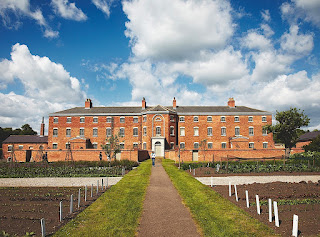
A Workhouse The Poor Law Act of 1834 was a legal act that completely stopped the poor from getting assistance unless they were in dire need of it. It labeled the poor as 'lazy' as well as saying that it was their own faults for becoming poor. Before the act, the poor had received charity from the wealthy but after the government passed this act, the rich began viewing the poor as lazy and dirty scum. From 1834 to the early 1900s, more and more people were being forced into various Workhouses.  Charles Dickens writes negatively about Workhouses, saying that they are awful places run by greedy masters who starve the residents. In his book "Oliver Twist" he describes the fictional orphan- Oliver- pleading the the master for more food but receiving nothing but a harsh punishments. However James Howard, a resident of Swansea's cottage homes (a branch of the Workhouse), went on from the home with a scholarship, attended Cardiff University, later becoming a ch...

The History of Hever Castle

Image
Hever Castle Hever Castle, with its beautiful gardens and well- kept walls, is about 700 year old. It was originally built as a medieval house in 1270.  In the 15th and 16th centurys the castle was residence to one of the most powerful families in England, the Boleyns, who added the Tudor style architecture and furnishings within the walls. Hever Castle is located in Kent, England.  Anne Boleyn , the second wife of King Henry VIII of England, her brother George and their sister Mary spent their early childhood at Hever castle. Their father, the nobleman Thomas Boleyn, inherited the castle from his father in 1505.  Anne of  Cleves  Anne Boleyn was executed in 1536, along with her brother George, for incest and adultery and, worst of all, high treason. The court put shame on Thomas Boleyn, and he lived for two more unhappy years until his death in 1538. The castle was then given to the crown. It later formed part of the settlement of  Henry VI...